

Advice Hub
All our collective industry experts have got together to provide you with all you need to know about drying out and keeping dry those things precious to you. Read our articles or delve into our solutions centre to soak up the knowledge.
Expert Articles
Advice & Article
Drying Screed: Heat vs Dehumidifiers
This article is part of our Smarter Way to Dry series, comparing heating and dehumidification across different drying challenges. Other topics in the series include Flood Drying, Condensation & Mould, and Drying Carpets.
Why Screed Needs Controlled Drying
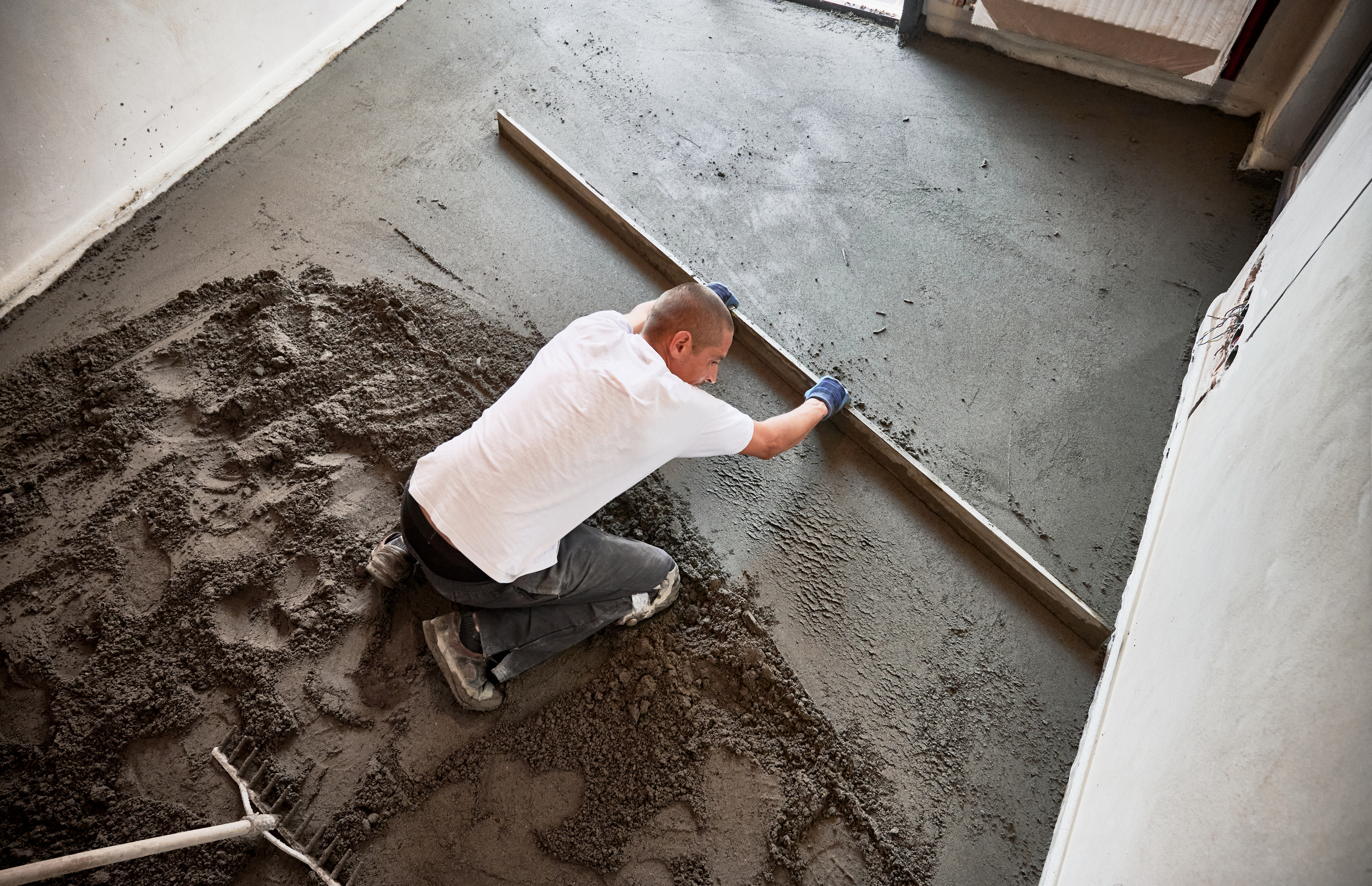
Getting a new screed floor to dry evenly is one of the most critical steps in any build or refurbishment. Drying too slowly delays the project; drying too fast risks cracking, curling, and weak spots. The key to success is managing temperature, airflow, and relative humidity (RH) together, rather than relying on heat alone.
When screed cures, water evaporates from the surface and migrates upward from deeper layers. If the surrounding air is already humid, evaporation slows and moisture remains trapped. If it’s too hot and dry, the surface can harden before the layers beneath have finished releasing moisture — causing tension and cracks.
The most effective solution balances gentle warmth, steady airflow, and active moisture removal.
Heat Alone Isn’t Enough
Adding heat helps evaporation — but only to a point. A heater raises the air temperature, allowing more water vapour to form, but if that moisture has nowhere to go, the air quickly reaches saturation. The result is a warm, damp environment that actually slows down drying once the RH climbs past 70%.
Overheating is also a risk. When screed is exposed to temperatures much above 25 °C, the surface can dry faster than the base, leading to curling or a weak bond.
Why Dehumidifiers Make the Difference
A dehumidifier actively removes moisture from the air, reducing RH and creating conditions where water can continue evaporating from the screed. In a sealed or semi-sealed space, this is the safest and most efficient way to speed up drying without damage.
For typical projects, aim to maintain:
- Air temperature: 18–25 °C
- Relative humidity (RH): 40–60%
- Even air movement across the surface — not direct airflow on one spot
Refrigerant dehumidifiers work well in standard indoor temperatures, while desiccant models perform better in cooler conditions.
For commercial projects, see our full range of Industrial Dehumidifiers and Desiccant Dehumidifiers, designed for construction and low-temperature environments.
Best Setup: Heater + Dehumidifier + Air Mover
The ideal screed-drying setup combines three elements:
- Gentle heat — to encourage moisture to migrate from the screed.
- Dehumidification — to extract that moisture from the air.
- Air movement — to circulate dry air evenly throughout the space.
Position the dehumidifier near the centre of the area, place air movers so that air circulates across (not directly onto) the screed, and keep doors and windows closed except for short ventilation breaks to release saturated air.
You can explore our selection of Air Movers & Fans and Building Dryers to create a balanced drying system for any size site.
Force Drying with Underfloor Heating
If your screed includes underfloor heating, you can use the system for controlled “force drying.” Start by running it at a low temperature for 24 hours, then increase by 5 °C each day until reaching the normal operating temperature. Maintain that level for a few days, then lower it gradually.
Always pair force drying with a dehumidifier to remove the evaporated moisture; otherwise, the humidity build-up will cancel out the gains. For these conditions, a Desiccant Dehumidifier is often the best choice, as it continues to extract moisture efficiently even in cooler environments.
Practical Tips for Even Drying
- Monitor RH daily with a hygrometer to confirm steady progress.
- Seal the area as much as possible to prevent new moisture entering.
- Avoid strong draughts or direct heat sources aimed at the floor.
- Empty condensate tanks regularly or use a continuous drain hose.
- Use moisture-content testing (e.g. CM test or digital meter) before laying floor finishes.
When to Stop Drying
A screed is considered ready when it reaches the manufacturer’s target moisture level — typically 0.5% CM for cement-based or 0.3% CM for anhydrite screed. Testing is essential; drying times vary with thickness, ventilation, and ambient conditions.
Key Takeaway
Relying on heat alone can make screed appear dry while trapping moisture underneath. Combining moderate heat, dehumidification, and controlled airflow produces faster, safer, and more consistent results — saving time without compromising quality.
Need help choosing equipment? Visit our Construction Drying Solutions section for recommended setups and guidance from the Climate Dry team.