Powerful Commercial Heating Control
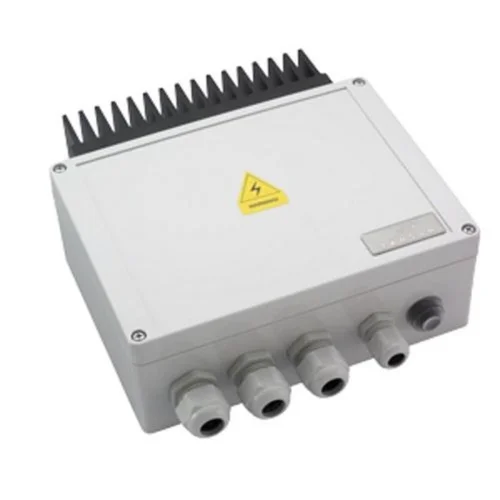
The Tansun 6.5kW Wireless Receiver is engineered to manage high-output infrared heating systems. It can handle loads up to 6500W and is ideally suited for controlling either a single 6.5kW heater or two 3.2kW units simultaneously. This capacity makes it versatile for larger commercial spaces requiring substantial heating power.
Precision Output Regulation
This receiver offers a four-tier dimming function, allowing for nuanced control over heating intensity. Users can adjust output to 100%, 75%, or 50% or switch off entirely, providing the flexibility to balance comfort with energy efficiency. This feature is particularly valuable in dynamic commercial environments where heating needs fluctuate throughout the day, as it allows for precise control over energy consumption and comfort levels.
Robust Design for Uncompromising Commercial Applications
This wall-mountable unit measures 195 x 200 x 75 mm and is designed to withstand the demands of commercial settings. Its construction ensures reliable performance in various environments, from outdoor dining areas to industrial workshops, where higher-wattage heaters are standard.
Scalable Heating Management
While each receiver can manage up to 6500W, the system's true power lies in its scalability. Scalable heating management means that when paired with these receivers, a single Tansun remote control can orchestrate up to 1000 infrared heaters. This feature enables the creation of sophisticated, zone-based heating systems in large commercial spaces, providing a comprehensive and flexible heating solution.
Versatile Power Handling
Operating on standard 230 Vac at 50/60Hz, the TAN6.5KWDIM model is compatible with most commercial electrical systems. Its ability to control resistive loads up to 6500W makes it suitable for Tansun's higher-output infrared heater models, providing a uniform control solution across different heating configurations.
Enhanced Operational Efficiency
This receiver significantly streamlines the management of commercial heating systems by enabling remote operation. It eliminates manual adjustments, allowing staff to modify heating settings from a central location. This capability is precious in expansive spaces or areas where heaters are mounted at significant heights.